
What is the Rule of Thumb for Bathroom Vanity?
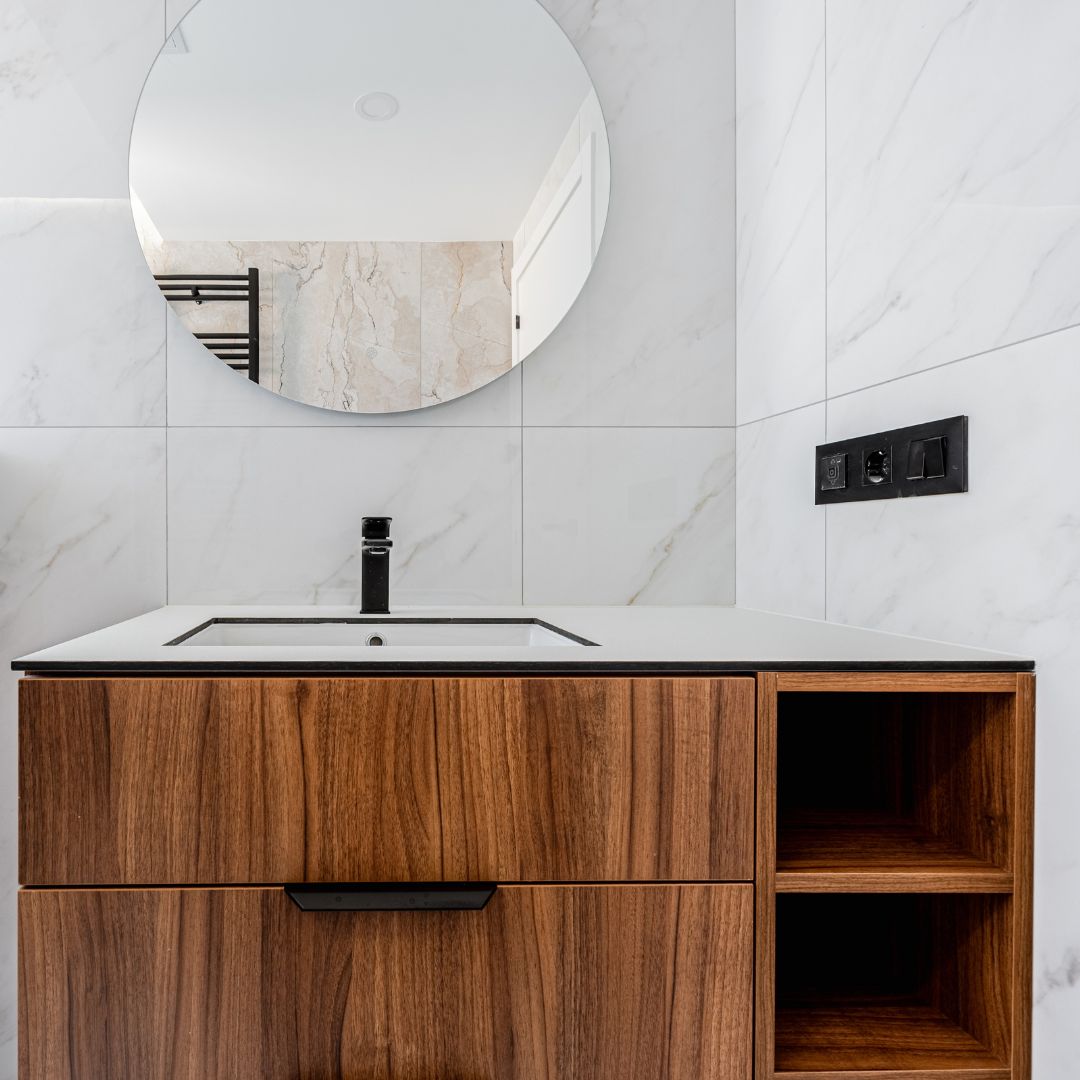
Size, height, depth, sink placement and storage are the kind of decisions you have to make if you are choosing a bathroom vanity. But it's easy to overthink or get something wrong.
That's where rules of thumb come in. They're not perfect for every situation but they give you solid starting points. And most come from builders and designers who've installed thousands of vanities.
They cover the basic basics of everything from the clearance space you need around your vanity to how deep your vanity should be. So if you follow these rules then you’ll avoid most of the mistakes.
The Bathroom Vanity Rule of Thumb Explained
The basic rule of thumb for a bathroom vanity is that you choose a vanity size that fits the wall. But also leaves at least 30 inches of clear walking space in front. And that clearance is more important than the cabinet itself.
Plus, designers rely on this rule because bathrooms are tight, plumbing is fixed and daily movement must feel natural. So, a vanity that technically fits the wall can still block traffic, door swings or drawers. And a safe starting formula for you is to:
- Keep at least 30 inches of clear floor space in front of the vanity
- Leave enough side space so drawers open fully
- Match the vanity width to the room size and not just the wall
The rule works in most standard bathrooms. But it needs adjustment in powder rooms or oversized primary suites.
Vanity Size Basics Most Buyers Get Wrong
Many buyers focus only on width. And that is where problems start. Because the size of the vanity is about height, depth and proportion all together.
Standard height:
Most vanities fall between 32 and 36 inches tall. Because older homes often have shorter cabinets. But modern buyers prefer 34 to 36 inches because it reduces bending.
Depth:
Standard depth is around 21 inches. Because this allows enough counter space without pushing into walkways. Depth mistakes are more common than width mistakes. Oversized depth quietly shrinks the room.
Width:
Widths typically range from 24 inches for small bathrooms to 72 inches or more for shared spaces. But the right width depends on room size and user needs. And in tighter layouts, a slightly smaller cabinet often feels more comfortable than a wall-to-wall install.
If you are looking at bathroom vanities with tops should confirm that the countertop overhang does not reduce clearance further. And small details like this change how the room functions.
Height That Feels Right Every Day
Modern vanities lean taller for ergonomic comfort. Around 34 to 36 inches suits most adults and reduces strain. Because function should outweigh tradition.
Depth and Width That Don’t Cramp the Room
Vanities deeper than 21 inches often cause movement issues. Because wider is not always better either. So, proportions are more important than filling every inch of wall space.
Clearance Rules That are More Important Than Vanity Size
Clearance determines whether the room feels open or frustrating. You should have:
- A minimum of 30 inches of space in front of the vanity
- Enough side room for cabinet doors and drawers to open fully
- Comfortable spacing between a vanity and toilet or shower
Ignoring clearance creates daily friction. Like door bumps, drawers collide and movement feels restricted.
So when you’re shopping for bathroom cabinets in Alpharetta then you might often discover that showroom displays look spacious because they are staged in larger settings. But real bathrooms require stricter measurements.
The Minimum Space You Should Always Measure First
You should start with front clearance. So, measure from the wall where the vanity will sit to the nearest obstruction. Because if you do not have 30 inches then reconsider the depth or width before buying.
Using the Rule of Thumb When You’re Ready to Buy
Before shopping for a bathroom vanity you should measure carefully. And note wall width, plumbing location and door swings. Also, you should match the bathroom vanity size to your existing plumbing whenever possible. Moving drains adds cost.
That’s why visiting a showroom helps. Because seeing bathroom vanities with tops in person gives you a clearer sense of scale and finish quality. And expert guidance often prevents layout regrets that online browsing cannot catch.
Frequently Asked Questions
What are the most common vanity designs to avoid?
Wall-to-wall oversized units in small bathrooms and ultra-deep cabinets that block movement are common mistakes.
What should you consider when buying a bathroom vanity?
Height, depth, clearance, storage needs and plumbing placement matter more than color or style.
What is a bathroom vanity's shallowest depth?
Around 18 inches is considered shallow. Because it works in tight spaces but reduces storage capacity.
Final Takeaway
The rule of thumb for a bathroom vanity is simple. You just have to prioritize clearance, proportion and daily comfort. Plus, do not choose the vanity size based on appearance alone.
You should measure your space, protect your walking room and think about how you actually use the bathroom. Because when you do these right then the vanity feels natural rather than forced.
If you want expert help choosing the right fit then visit Bathroom Vanity Alpharetta. We have options designed with real layouts in mind and that will match your needs. Visit us today!