
How to Choose a Bathroom Vanity for a Narrow or Awkward Layout
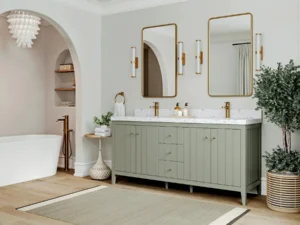
You want a bathroom vanity that is functional and appealing. But your space makes that hard. The wall is narrow. The door swings too far. The toilet is in the way. Maybe the room has an odd angle that does not fit standard sizes. You keep looking at vanities online and they all seem to assume your bathroom is a normal rectangle. It is not.
That is the frustration. You need something that fits your layout, not one that fights it. A vanity that is too deep blocks movement. One that is too wide crowds the sink. The wrong shape can make the whole room feel awkward.
At Bathroom Vanity Alpharetta, we work with homeowners who have these exact problems. We have seen narrow galley baths, powder rooms with tight corners and spaces where every inch matters. We help you find a vanity that fits your room and your routine, not just the wall.
Measure the Space Before You Pick a Vanity
Grab a tape measure. Do not estimate. Walk into the bathroom and read the numbers.
You need the wall width. But you also need depth. How far does the room stretch from the wall to the opposite fixture? Check the door swing. Does it hit the toilet? The tub. A nearby cabinet.
Stand where the vanity will go. How much floor space do you have to stand? Twenty inches. Fifteen. Ten. That number shapes your choice.
Most vanities are 21 to 22 inches deep. That works in larger bathrooms. In a narrow one, that depth can feel like a wall. You bump your knees. The shower door barely opens. The room feels tight.
A shallower vanity gives you back space. It widens the floor path. It makes the room feel open. Saving four inches in depth can matter more than saving six inches in width.
Choose Between Floating or Corner Styles
Not all vanities sit on the floor. Some hang on the wall. Floating vanities are popular. They look modern. They feel light.
They also help small rooms. Since they hang off the floor, you see more of the tile. The room looks bigger. You can sweep under it. No toe kicks or baseboard gaps to fight.
Corner vanities are another option. People ignore corners. They see a dead wall. But a corner unit solves tough layouts. It uses space that would otherwise go unused. It keeps the room center open.
These work well in powder rooms, secondary baths and guest rooms where you only need one sink. You get a function without the bulk.
Depth Changes the Room More Than Width
Width gets attention. You scroll online. You see 30 inches. 36 inches. 48 inches. You match the wall length.
Depth is the hidden issue. You bring in a 22-inch deep vanity. It fits the wall. But now you cannot walk past the toilet. The door barely opens. The room feels cramped.
Flip that. Use a 16-inch deep vanity. Same width. Same sink. Same counter. But now the floor is wider. You can move. The room feels normal again.
Do not go too shallow. If it is too narrow, storage drops. You lose counter space. The vanity feels useless. You want balance. Enough depth to work. Enough room to stand.
Store Smart Without Cluttering the Room
Small bathrooms show clutter fast. Bottles, tools and forgotten items often stack up. You need storage. But you do not need a giant cabinet. You need smart storage. Drawers beat deep open bins. You can reach in and organize easily.
If pipework takes up space inside the vanity, choose a design with drawer cutouts and smart internal storage that works around the plumbing. It’s a simple way to make sure every bit of storage remains practical and accessible.
When the vanity is small, use the wall. A mirror with shelves, a wall cabinet and a hanging towel rack. Spread storage across the room. Don’t try to force everything into a single box.
What Finish Is Best for a Vanity in Tight Spaces
This is where finishing matters even more. What finish is best for a bathroom vanity in a narrow layout depends on your room and how you use it. Bathrooms get humid. Water splashes happen. You need something that holds up, especially when the vanity is smaller and every surface gets used more.
Painted finishes work well if they are sealed correctly. They wipe clean. They look fresh. But they can chip if something heavy hits them. In a tight bathroom where you bump into things more often, that risk goes up.
Wood finishes like walnut or white oak feel warm. They look natural. They need care, though. A good seal or oil keeps water from soaking in. Without it, wood can swell or stain. In small spaces, water tends to stay on surfaces longer, so sealing is key.
For maximum durability, look for vanities with a hard coat finish. These resist water, scratches and daily wear. They are easier to keep clean in a busy bathroom, which matters when you have less room to avoid splashes and spills.
A Corner Vanity Can Fix a Weird Layout
Corner vanities are not just for small bathrooms. They are often the smartest solution for awkward layouts: rooms with short walls, challenging door swings, or fixtures that limit your design options.
By positioning the vanity in a corner, you can free up valuable floor space and open up the centre of the room, creating a layout that feels more spacious and functional.
They are particularly well suited to guest bathrooms, where a single basin, practical storage, and a clean, uncluttered appearance are often all that’s needed.
That said, accessibility should always come first. Make sure the sink is comfortable to use and that drawers and cabinet doors can open fully without obstruction. If a corner placement compromises usability, it may be better to consider an alternative layout.
Match the Vanity to Your Routine
Think about how you use the bathroom. Who uses it? When. How often.
If you grab things fast, use drawers. If it is shared, keep the surface clear. If it is for guests, style matters more than storage.
Small bathrooms show mess. Water spots. Dust. Hair. Pick a finish that wipes clean. Hardware that does not rust. Materials that hold up. Wood, solid builds, good seals.
Custom is worth it here. If your wall is off square. If the space is weird. A made-to-fit vanity solves that. You get the exact size. No gaps. No wasted space.
We build custom options and offer affordable bathroom cabinets in Alpharetta that homeowners trust for style and strength. Hence, when choosing from us, you get a vanity that fits your room. Visit us today to explore our high-quality vanity collection.
FAQs About Bathroom Vanities Purchase
What is the best depth for a bathroom vanity in a narrow bathroom?
Go 16 to 18 inches deep. Some compact models go as shallow as 9 inches for tight spaces.
Should I use a floating vanity in a small bathroom?
Yes. Floating vanities show more floor. The room feels bigger and moves more easily.
When does a corner vanity work for an awkward layout?
Use it when walls are short, doors are closed or toilets block normal spots. It frees up the center.
How do I avoid blocking a door with a bathroom vanity?
Check the door swing. Leave 21 inches of floor space in front of the vanity.
Can I get storage in a narrow bathroom vanity?
Yes. Use drawers with plumbing cutouts, wall cabinets or mirrored shelves to store without crowding.